When youll first feel baby move quickening Most women feel the first movement of their active little tenant known as quickening between weeks 14 and 26 but generally closer to the average of week 18 to week 22 though variations are common. With time the activity of baby increases at a steady pace.

When Can You Feel The Baby Kick
The uterus and nearby intestines dont have their own sensory nerves so any movements of the baby must be vigorous enough to transmit the sensation to the nerve receptors in your abdominal surface or pelvic area.

When do u feel the baby move. If your partner places their hand on your stomach they may feel the baby move as early as week 20. As your baby becomes bigger and stronger your. By the second trimester your babys movements will become more organized.
If this is your first pregnancy you may not feel your baby move until closer to 25. But Bartos says when and even if others can feel the baby move really depends on the position of your placenta. Some moms can feel their baby move as early as 13-16 weeks from the start of their last period.
According to BabyCentre most women feel their first movement between the weeks of 14 and 26. It may be difficult to determine whether this feeling is gas or your babys movements but soon you will begin to. Early in your pregnancy you may just feel a few flutters every now and then.
These first fetal movements are called quickening and are often described as flutters. Some pregnant people can feel their baby kick as early as 13 to 15. Babies tend to move more at certain times of the day as they alternate between alertness and sleep.
If youre in your first pregnancy you may not feel movements until youre closer to. If this is your first baby you might not feel movements until after 20 weeks. This is known as the Quickening and will usually feel as though you have butterflies in your stomach and not appear as a major kick or push from inside your body.
When exactly you notice those first fetal movements varies from mama to mama and pregnancy to pregnancy. When Can You Feel the Baby Move. Soon a mother.
When do you feel your baby kick for the first time. You should feel your babys first movements called quickening between weeks 16 and 25 of your pregnancy. A mother will notice that her baby seems livelier in day time whereas in evening are usually somersaults and kicks.
When will you feel quickening in pregnancy. Your babys first movements are called quickening and youll notice them sometime between 16 to 25 weeks of your pregnancy. Where your placenta is attached can make a big difference to when you feel movement.
How Early Can You Feel Your Baby Move. Even though your baby has been moving around in your womb since 7 or 8 weeks he wasnt big enough and his movements werent strong enough for you to notice. An anterior placenta makes it more difficult for family and friends to feel the baby move.
When Can You Feel The Baby Move According to the American Pregnancy Association some women can feel fetal movements within 13 to 16 weeks from the start of their last period. For friends and family who have permission it is sometimes possible to feel the baby move by placing a hand on the pregnant womans bump. After knowing when do you feel the baby move the next step is to know what normal baby movements feel like.
However sometime between week 12 and week 16 of your pregnancy you will feel your baby move for the first time when they reach around one pound in weight. 20 to 24 weeks. You probably wont feel your baby move until sometime in your second trimester usually between 16 and 22 weeks.
The fetus begins to be able to flex his arms and legs between weeks 13 and 16 of pregnancy. However other people may not notice the fetal. Some time between 16 weeks and 25 weeks.
When youll feel your baby move You should start to feel your baby move between around 16 and 24 weeks of pregnancy. If you have not felt your baby move by 24 weeks tell your midwife. 1 But it will take longer before someone else can feel the baby kick from the outside.
Surprisingly your baby may start moving as early in the first trimester around 8 12 weeks gestation. The easy and vague answer is. Your partner parents siblings and friends will usually be able to feel the babys kicks when youre around 24 to 28 weeks pregnant.
But as your baby grows -- usually by the end of the second trimester-- the kicks should grow stronger and more frequentStudies show that by the third trimester the baby moves about 30 times each hour. According to the American Pregnancy Association it may take an expectant mother anywhere from 13 to 25 weeks to begin feeling the baby move depending on a number of factors.
However the earlier they are phased out the better. If you wean within the first 612 months youll need to supplement your reduction of breastmilk with formula.
Formula Feeding Your Baby

If a baby is fully formula fed formula.

When do you stop giving baby formula. They thrive on breastmilk alone for the first 6 months of life. In order to be ready to switch from baby formula to toddler formula or cows milk your baby needs to. If youre pregnant youve probably already thought about how youll inevitably feed your baby.
When Do Babies Stop Eating Formula. Its best to introduce a sippy cup around six to nine months. Your baby is most likely ready to transition to whole cows milk at 12 months old.
However there are situations where formula might be necessary. At What Age Do Babies Stop Drinking Formula. At first your little one will keep it simple with just a few teaspoons of a one-ingredient food like a.
In general experts recommend weaning your baby off of formula and onto full fat dairy milk at around 12 months of age. When should a baby stop drinking formula. You can start weaning your baby off his bedtime bottle between the ages of 6 and 9 months.
Even after you start solid foods you should continue offering your baby formula until she reaches 12 months. The American Academy of Pediatrics AAP recommends starting weaning from the bottle by 12 months of age and for bottles to be completely phased out by 24 months 3. At this point theyve likely developed enough to be eating solid foods and drinking water from a cup.
The American Academy of Pediatrics AAP recommends feeding your baby breast milk or formula exclusively until about 6 months old. You can always discuss this with his pediatrician. Experts recommend introducing common food allergens to babies when theyre 46 months old.
Six months is when many babies stop needing that before-bed feeding. While the primary caregiver of a baby is often diligent about serving the baby warmed bottles someone who watches the child only occasionally may inadvertently give the child a cold or room-temperature bottle for the first time without thinking about it. When Do Babies Stop Drinking Formula.
Most pediatricians agree that babies should be weaned from formula at a year old. Monitoring babies attitude toward formula andor breast milk can help determine if theyre ready for weaning. Up until the one-year mark she still needs breast milk or formula every day.
The switch from warming up baby bottles to giving your child non-warmed bottles often occurs by accident. This includes babies with a family history of food allergies. Breastmilk or formula is considered to be a.
Be at least 12 months old or as young as 10 months for some Stage 3 formulas Be eating a healthy balance of fruits vegetables dairy grains and proteins each day Be eating approximately 1000 calories each day. Your baby doesnt need any other drinks during this time. While its harmful to feed your baby cows milk before 12 months its not that your baby absolutely must stop feeding on formula as soon as theyre a year old.
Most babies dont need any formula. In the past they thought that babies should not get such foods like eggs peanuts and fish until after the first birthday. Babies need the nutrients in formula or breast milk for the first year of life.
Its not written that you HAVE TO stop formula at 1 yr- they do make formula for toddlers. Certainly by 9 months its not a necessity says Bradley Bradford a pediatrician in Delray Beach Florida and spokesperson for the American Academy of Pediatrics. Some parents feed their baby formula until 18 months and begin weaning then.
For the first 4 to 6 months breast milk or formula is the only food your baby needs. Its natural to wonder how the hospital you deliver at might play a roll in that decision too. Most doctors suggest keeping them on formula for at least a yearand switching off formula and milk around 9 months.
The idea being that you want to make sure your little is getting what he needs from other food sources before taking away the one source. After that you can start solid foods when your baby show signs of readiness. Apparently the general rule of thumb is that before 12 months of age formula is the way to go.
Parents can stop bottle feeding suddenly or opt to gradually substitute bottle feeding with solid foods and other beverages. Mother of Boys Carter James- 25 yrs old Kayne Andrew-.
If your baby is eating every 4 hours its very likely their feedings will be larger. Once they turn 6 months old they may take up to 8 ounces every four or five hours says the AAP.

Baby Feeding Chart How Much And When To Feed Infants The First Year Parents
Whenever you introduce a new food start with a very small amount a teaspoon or two to allow your baby to get used to a new flavor and texture.
/how-much-breast-milk-should-i-put-in-a-bottle-431802_v22-2d8080d546374d1f92867a772f1989fd.png)
How many ounces should a baby eat. The feeding schedule for bottles remains at 3 times a day for the rest of the week but I increase the milk to 10 ounces per bottle. At this time the daily milk intake should be about 32-36 ounces for each baby goat. Again baby will signal to you when he is full.
Around this age they should be drinking roughly 7-8oz about 3-4 times a day. However dont be surprised if they move towards dropping a milk feed. He or she does not need a lot of infant formula with each feeding to be full.
The Centers for Disease Control and Prevention CDC recommends giving babies who are 6 to 12 months old 4 to 6 ounces of water a day but what your baby decides to drink may vary. As a rough estimate your baby should eat 25 ounces for every pound they weigh. At 4 months babies usually take 4 to 6 ounces per feeding.
Over the course of a day offer a 9-month-old foods of different colors. 10 month old baby development newborn baby feeding and sleep schedule 12 non meat protein sources for kids formula fed babies eat how many ounces should a baby eat chart How Much Should Tfed And Formula Fed Babies EatFeeding Baby How Much Should A Newborn EatHow Much Formula Does Your Baby NeedNewborn BabyCalculate How Much Read More. At about 2 months of age babies usually take 4 to 5 ounces per feeding every 3 to 4 hours.
You can offer your baby water once she starts eating solids but let her self-regulate how much she drinks. A nine-month-old babys nutritional needs arent much different from the nutrients that adults need too. Aim to give your baby 25 ounces of formula per pound of body weight each day says Amy Lynn.
If you are exclusively bottle feeding heres a guide to how much and often should feed formula your baby. A baby should be having 24 to 32 oz of formula a day at this stage. She may drink more on a hot day for example.
Baby will likely get hungry every three to four hours eating about 2 ounces per feeding as a newborn and progressing to 4 ounces by the end of the first month. Keep in mind that some babies simply have larger appetites than others. 68 ounces formula breast milk or water.
The amount your formula-fed baby eats will depend on his weight age and appetite which can vary from one day to the next just like yours does. As your baby gets more comfortable with eating you can start to add a variety of foods and increase the frequency of meals. As a rule of thumb infants under 6 months who havent yet started solids will take in 2 to 2 12 ounces of.
Most newborns eat every 2 to 3 hours or 8 to 12 times every 24 hours. Breastfeeding babies eat 2-3 times at night while formula-fed babies eat. General Guidelines for Baby Feeding.
You can start by offering your baby 1 to 2 ounces of infant formula every 2 to 3 hours in the first days of life if your baby is only getting infant formula and no breast milk. Average Total Per Day. In younger newborns and up to 2-3 months old your baby should breastfeed on-demand which usually means every 2-3 hours.
Expect to add about an ounce per month until baby is eating 6 to 8 ounces of formula at a time which usually happens when baby is 6 months of age. By 8 months its typical for your baby to be eating one to two meals a day. So if your baby weighs 10 pounds they should eat a total of 25 ounces per day.
Continue to offer breast milk or formula. Here are some colorful examples. Breastfed babies may feed every 3-6 hours.
By 8 months babies. As your baby nears their first birthday they should be eating a variety of foods and taking in about 4 ounces of solids at each meal. At 6 months babies may be taking up to 8 ounces every 4 to 5 hours.
Green green beans peas spinach zucchini and asparagus. If you are pumping breastmilk bottles vary in size from 3 to 6 ounces usually with 4 ounces being the average size once a baby is at least 3-4 months old. Babies might only take in half ounce per feeding for the first day or two of life but after that will usually drink 1 to 2 ounces at each feeding.
5-8 breastfeeding sessions 20-25 ounces of breastmilk or 20-30 oz of formula. By this time the baby goats are eating hay nibbling on grains and still getting their bottles of milk 3 times a day. The question of how many ounces should a newborn drink also depends on a babys measurements.
Indeed babies should still drink about 4-6 ounces per feeding when theyre 4 months old.
Extended periods of pushing and contractions during a long difficult labor can result in brain damage. Its common for babies and toddlers to hit their heads while exploring and in most cases theres nothing to worry about.

Head Injuries How To Recognise Them What To Do First Aid For Life
But most of the time if a baby hits her head shell be unharmed except for perhaps a bruise or goose egg that can be treated with infant Tylenol and an ice pack.

Baby head injuries. The more force that is involved in a head injury the more likely it is that a serious injury to the brain. For example frozen vegetables wrapped in a. Complications include seizures visual impairment cerebral palsy and cognitive impairment.
In infants younger than 1 year old most serious head injuries are related to child abuse. If your baby has knocked his head and has a lump bruise cut or more severe injury he should see a doctor. Get them to rest and apply something cold to the injury.
Serious head injuries may involve injuries to the brain. A mother was under arrest and undergoing a mental evaluation Thursday night after her 7-month-old baby was found with a serious head injury. If your baby is showing any of these symptoms after experiencing an injury to their head call 911 or take them to the nearest emergency room immediately.
The head may get stuck in the birth canal for instance or the doctor may use an instrument like forceps with too much force on the babys head. Symptoms may include vomiting or a baby that will not settle. These are all signs of serious head injuries such as a concussion or shaken baby syndrome.
Infant brain damage could be the result of an acquired or a traumatic brain injury. So how can parents know if it might be something more serious like a mild brain injury commonly called a concussion which disrupts normal levels of brain function. A traumatic brain injury occurs when some physical force from the outside strikes or puts pressure on the head.
Symptoms may range from subtle to obvious. Call 999 for an ambulance if your baby. To soothe him you can continue to breastfeed or if hes above 6 months old then you can offer him clear liquids.
Becomes unconscious even if he wakes up. If your baby has a serious head injury hell need urgent medical treatment. To help prevent further injury dont move your baby if possible.
But sometimes head injuries can result in damage to the brain. Try not to move in case of. Has bleeding from his ears or bruises behind his ears.
As you may have noticed simple everyday activities can be a cause for concussion in babies. Often there are no visible signs of trauma. Monitor breathing prepare to do CPR if necessary.
A blow to the head may result in the baby or child having pain or a headache. Shaken baby syndrome SBS also known as abusive head trauma AHT is an injury to a childs head caused by someone else. To continue reading this article you must log in.
Assess their level of response with AVPU scale. Your baby might vomit after getting a head injury just because he is feeling upset about the whole ordeal and hurting which is perfectly normal unless there is persistent vomiting over the next 6 to 24 hours. Also breaking right now a mother under arrest after her seven-year-old baby-- seven-month-old rather was found with serious head injuries.
The American Academy of Pediatrics recommends as a safety measure that you take your baby to a doctor if there is any injury to the head. This may occur in an infant during childbirth because of birth injuries. If used incorrectly or with too much force brain damage or other physical injuries may occur such as a hematoma on the babys head.
If a baby or child experiences any of the following after a head injury immediately call 911. If unresponsive or worried call 999112. Hold an ice pack against their head.
This swelling causes a rise in pressure within the brain intra cranial pressure or ICP. Has a bruise swelling or cut on his head of at least 5cm or is bleeding heavily. Symptoms of Serious Head Injuries in Infants.
A head injury is a broad term that describes a vast array of injuries that occur to the scalp skull brain and underlying tissue and blood vessels in the childs head. Swelling of the brain affects most children after a severe head injury. Head injuries are also commonly referred to as brain injury or traumatic brain injury TBI depending on the extent of the head trauma.
CBS 2s Charlie De Mar reports. Baby minor head injury. The most common causes of childhood head injuries in the United States are motor vehicle accidents falls assaults bicycle accidents and trauma related to sports.
Becomes drowsy or unresponsive. Babies are at a greater risk of head injuries in car crashes because their heads are larger in proportion to their bodies. The most common serious head injuries in young children are caused by falls and abuse inflicted head injuries such as shaken baby syndrome.
Possible complications of head injury. Learn first aid for a baby or child who has a head injury. It can occur within hours or it may not happen for a few days.
Baby severe head injury. There may be a bump on their head and they may look pale. They can also sustain a concussion due to a fall from a two-wheeler or when riding a tricycle or bicycle.
On your shoulder face-down on your lap or sitting up. Keep in mind some babies find it easier than others to burp though so you may just.

How To Burp A Sleeping Baby Sleeping Should Be Easy
Apply all three positions on your baby to see what works best for your baby.
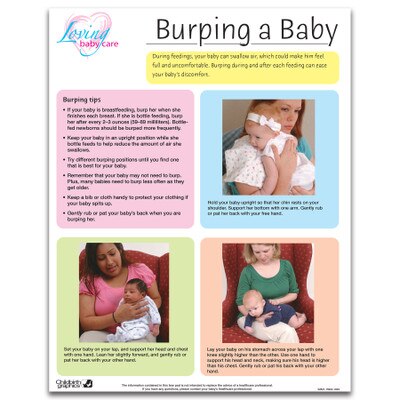
Baby burp positions. Place the baby in an upright position such as over your shoulder or lying over your lap. To reduce spitting up burp the baby several times during and after feeding. Dont apply pressure to their neck though.
If baby doesnt burp wait a few minutes then try again. Because your baby may spit up a bit more during a burp in this position an extra cloth may be needed. Its a good idea to try all three to see which gets the job done best for your little one.
Support her with one hand and gently pat or rub her back with the other. You dont need to spend ages burping your baby a couple of minutes should be enough. With the other hand gently pat your babys back.
There are three basic ways to burp a baby. 1 The shoulder position This position is preferred by most parents. If your child is restless and all else fails here are 13 more ways to get your baby to burp.
Shoulder position Face-down position Sitting up. Place your hands palm onto their chest and support their jaw and chin. This position helps your babys stomach to release gas with the pressure from your shoulders.
These tricks are based on familiar and not-so-familiar positions from sitting the baby on. When baby has more head and neck control consider what one mom did in a now-viral video. Let the baby lean over slightly bending at the waist.
Experimenting with different burping positions might help for example placing your baby over your shoulder or sitting or lying him or her on your lap as you gently rub the back. With time you can improve the position by finding the exact spot in your babys stomach to help her burp faster. It consists of holding the baby while his stomach is pressed against the parents shoulder.
Gently pat your baby while your baby is in a semi-upright position onto your shoulder. Many parents use one of these three methods. Try different positions for burping that are comfortable for you and your baby.
Your babys chin should rest on your shoulder as you support the baby with one hand. Baby burping position. Trying one of three different burping positions.
Hold your baby farther up on your shoulder high enough that your shoulder presses lightly on her belly creating gentle pressure that will let out the burp. Gently rub or pat their back. There is no need to worry about the amount of milk that comes up.
Here some of the best positions for burping a newborn. Make sure the shoulder does not pinch the babys neck or throat. The upright posture moves air to the top of the stomach and the forward lean puts a little pressure on.
Hold the baby at shoulder level positioning their head just above the shoulder. There are three basic position to burp your babies. One technique is to sit the baby upright with your hand supporting the head.
Try to burp your baby while switching sides at the breasts or finishing the bottle to prevent spitting milk. Make sure your baby is able to breathe comfortably and isnt slumped over too far. In addition to these baby burping positions you can also try carefully rotating babys body to help release some of the trapped gas.
There are a few ways to burp your baby. What are the best positions used in burping your baby. Dealing with a baby who wont burp and has gas is a challenge for any newborn mom especially when he just falls asleep.
What are the best positions for burping baby. Try them all out and see which works best or use a combination. Sit upright and hold your baby against your chest.
In the same position she moved babys legs in bent at the knee and lifted babys arms in a 90-degree angle out from babys body. Hold your baby upright against your chest with his chin on your shoulder all the while supporting him with one hand as. Sit your newborn on your lap facing away from your body.
Burping is simplefor the most part. Of all the different ways to burp a baby this method is perhaps the easiest. How to Burp a Baby.
Thankfully you now have 14 baby burping tricks to try. After feeding you should burp your baby always it makes them comfortable. When to Burp Baby Until you get to know signs baby needs a burp there are some simple rules-of-thumb to follow.
It is a lot less than it seems and typically does not result in poor weight gain. Support your babys head and neck make sure their tummy and back is nice and straight not curled up and rub or pat their back gently. Sit baby on your lap with her facing away from you supporting her head with one hand and her back with the other and slowly move her torso in a circular motion.