The Robot is a piece of equipment comprising three parts. The surgeon controls the robotic arm with a computer.
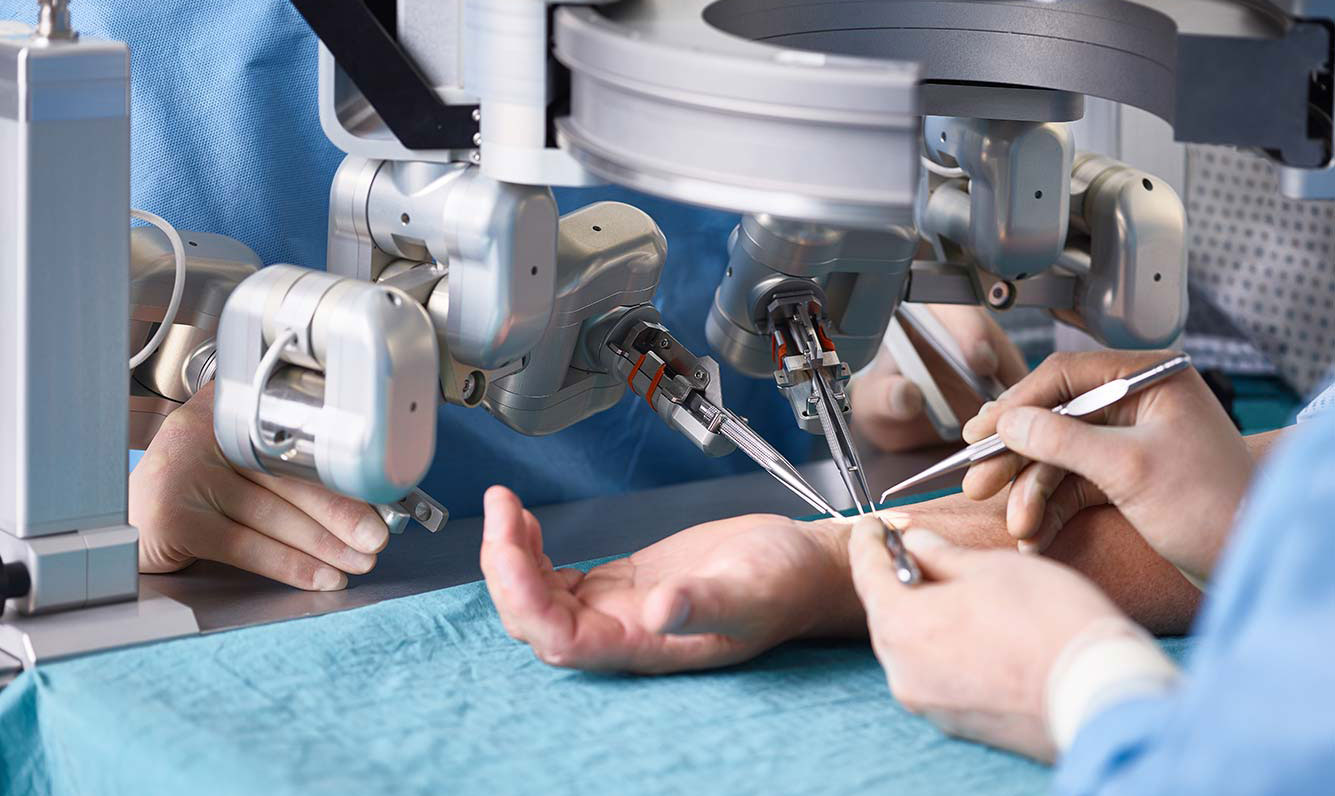
Robot Assisted High Precision Surgery Has Passed Its First Test In Humans Mit Technology Review
A study presented at the 2016 World Congress on Engineering and Computer Science discussed using machine learning to evaluate surgeon performance in robot-assisted minimally invasive surgery.
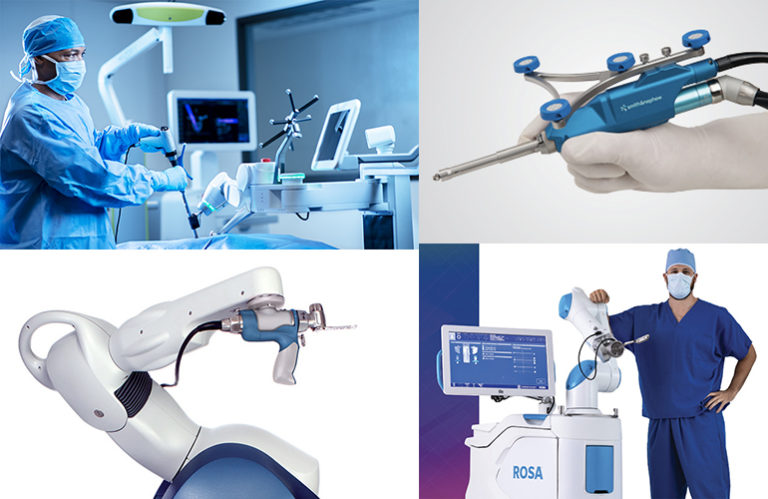
Robot assisted surgery. In 2000 robot-assisted surgery gathered significant momentum when the US Food and Drug Administration FDA approved the da Vinci surgical system for use in the United States. This study aims to verify the feasibility for automatic drilling without soft tissues in model test based on an industrial robot platformThis study chose the data from digital laboratory in. It is suitable for the high-stress procedures like drilling milling and cutting.
Many benefits of robotic-assisted surgery for patients have been demonstrated with supporting clinical evidence including. The introduction of robot-assisted surgery and specifically the da Vinci Surgical System is one of the biggest breakthroughs in surgery since the introduction of anaesthesia and represents the most significant advancement in minimally invasive surgery of this decade. Robot-assisted vitreoretinal surgery may hold significant advantages especially for novice surgeons both during training and the early phases of their careers by improving precision and limiting tissue damage compared to manual surgery according to a study presented at the 19th EURETINA Congress in Paris.
Robot-assisted surgery has advantages of high accuracy and stability. In the medical setting robot-assisted surgery emerged during the 1990s following the emergence of intraoperative navigation at the beginning of the decade. Robot-assisted surgery is relatively new to pediatric surgery and urology with only limited published experience although it has been used extensively in adults since the late 1990s to facilitate minimally invasive endoscopic surgery.
Robotic-assisted surgery RAS is opening new frontiers for doctors from improving precision and accuracy in spine surgery to more access and maneuverability in general surgery. Robot-assisted Surgery Minimally Invasive Robotic Surgery Patients at Northern Nevada Medical Center can get all the advantages of minimally invasive advanced robot-assisted surgery now that experienced physicians at the hospital are using the da Vinci Surgical System. Robot-assisted surgery is a method in which a trained surgeon manipulates mechanical arms on a specially designed robot to accomplish the tasks he or she would normally perform by hand.
From a seated position alongside the patient the surgeon manipulates the controls and his or her movements are then reproduced seamlessly by the robotic arms which remain completely steady with no trembling. Although it offers benefits. A control console a video column and articulated arms which operate on the patient.
The surgical robot takes this operation a step beyond traditional keyhole surgery. 1-3 RAS is poised for strong adoption in the OR suite. The technological developments of surgical robots have enabled the implementation of Robot Assisted Surgery RAS that offers minimally invasive procedures to patients.
The technology is used by surgeons of multiple specialties for. Stephen OReilly said he hoped it would speed up his recovery The patient is Stephen OReilly whom I. Less blood loss fewer complications shorter hospital stays smaller incisions for minimal scarring and faster recovery and return to daily life.
Enhanced with three-dimensional magnifying views and feedback-controlled enhanced motions of human hands robot-assisted surgery. Robotic surgery also known as robot-assisted surgery is a method of surgery that allows doctors to perform complex surgical procedures with greater precision control and flexibility than other more conventional surgery methods. As robotic technology becomes more commonly used in surgeries researchers are exploring automated methods of measuring surgical technique.
One of the first surgical use. Robotic surgery is a method to perform surgery using very small tools attached to a robotic arm. Robot Assisted Surgery has been successfully used to treat patients within Canada since 2003.
What is robot-assisted surgery.
It can be used as the sole anesthetic but it is more commonly administered in conjunction with GA primarily for postoperative analgesia. Pain control after surgery Part of pain management and recovery from surgery may involve the use of a peripheral nerve block.
Nfac Blog Can Nerve Blocks Improve Survival After Breast Cancer

Previous reports demonstrated few to no complications with the use of this nerve block but it is unclear whether these data are consistent with.

Nerve block for surgery. Some parts of the upper and lower arm will be numb but the hand will not. Surgical nerve blocks are permanent. Nerve blocks are used by anaesthetic doctors to make your footankle numb to reduce pain after an operation.
With the increased availability and use of ultrasound in the emergency department the literature shows that ultrasound can help localize the great auricular nerve and the lesser occipital nerve for nerve block. Peripheral nerve blocks are gaining popularity for orthopaedic limb surgery 1 but little is known about how patients experience peripheral nerve blocks as both anaesthesia and pain controlPeripheral nerve blocks are considered safe. Nerve blocks are often used during surgeries to ease pain.
A peripheral nerve block is a type of regional anesthetic that involves injecting local anesthetics and other painkillers near the major nerves to your arm or leg. You can watch the full series at once or in two- to three-minute segments. A nerve block or neural blockade is a method of producing anesthesia a loss of feeling used to prevent or control pain.
A nerve block works by temporarily numbing your nerves to give pain relief. Unlike with general anesthesia patients using nerve blocks receive multiple benefits including better pain control less time in the hospital quicker recovery and less need for medication when they go home. For this reason interscalene blocks are only recommended for shoulder surgery.
Historically the ring block was the most common method of peripheral external ear nerve block. Nerve blocks can be surgical or nonsurgical. A nerve block is the injection of numbing medication local anesthetic near specific nerves to decrease your pain in a certain part of your body during and after surgery.
They reduce postoperative opioid consumption 2 and their longlasting effect improves patient satisfaction in elective surgery 3. These videos explain what a peripheral nerve block is and how you can use it to control pain in the hospital and after you return home. This procedure carries less risk in a surgical setting compared with other forms of anesthesia such as a spinal block.
Nerve blocks for surgery on the shoulder arm or hand You will go to a room near the operating theatre to have the local anaesthetic injection. There are two main varieties of nerve blocks administered for shoulder surgery. The block numbs those parts of the shoulder innervated by the nerves originating from C5 to C7.
Doctors may use them to treat chronic debilitating pain syndromes. What are the benefits to me of having a nerve block. Benefits of a nerve block may include a shorter recovery period and better pain relief.
Functionally this results in reliable numbing of the shoulder area. For specific types of surgery your anesthesiologist may place a nerve catheter which may be used to continuously bathe the nerves in numbing medication for 2-3 days after the. They may also be used to manage the pain of chronic health conditions or injuries in which the nerves are damaged inflamed or irritated.
Nerve blocks can be used in some cases to avoid surgery. Preemptive nerve blocks are meant to prevent subsequent pain from a procedure that can cause problems including phantom limb pain. Nerve blocks are a type of regional anesthesia used in some musculoskeletal surgeries.
The injection for a brachial plexus block is in the side of your neck or in your armpit or close to. Interscalene brachial plexus block ISB provides complete regional anesthesia for shoulder surgery. For example a nerve block may be performed to determine if more permanent treatments such as surgery would be successful in treating pain.
They work by damaging or destroying specific nerve cells. A popliteal nerve block is a common analgesic procedure for patients undergoing surgery on their knee foot or ankle. Nerve blocks are commonly used to manage pain that comes from the spine as well as debilitating pain that affects the arms legs neck and buttocks.